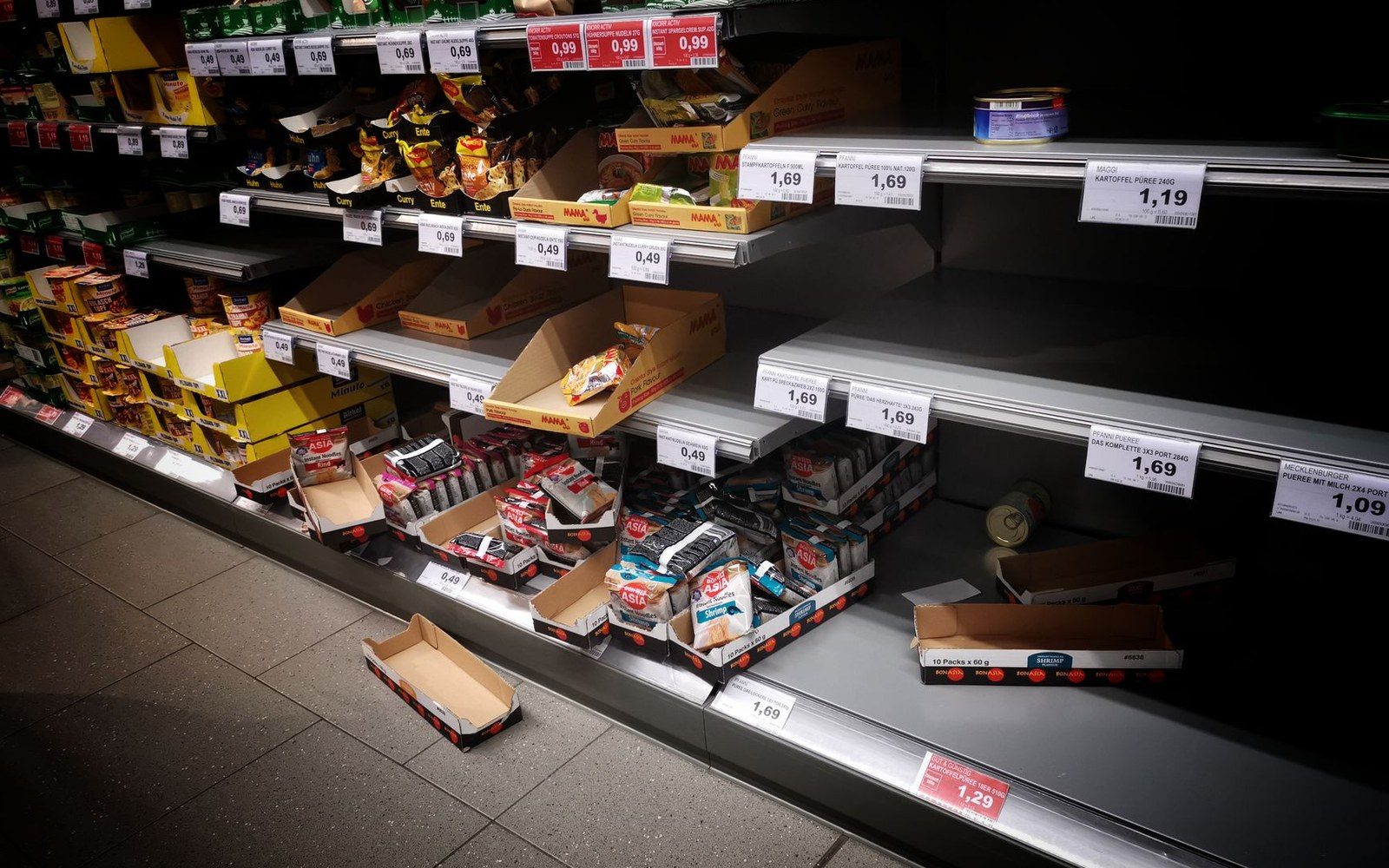
Every store has a dead zone. The problem is almost never visibility.
01The geometry of neglect
Walk any mid-sized grocery floor and one aisle will be measurably quieter than the others — fewer trolleys, longer dwell times from the rare visitors who do enter, and a faint air of forgotten stock. Store planners call this the underperforming bay or, less diplomatically, the dead aisle. It is almost always a predictable address: tucked against a far wall, off the perimeter loop, rarely interrupted by an end-cap or any fixture that pulls a passing eye inward.

A low-traffic aisle is a layout problem before it is a signage problem.
Fig. 2 · Photo: Nothing Ahead / Pexels
The standard retail instinct is to add signage — a hanging banner, a category flag, a floor decal pointing the way. It rarely works, because the problem is not that shoppers cannot see the aisle; it is that the route they arrived by has already made the decision for them. A shopper following the established anticlockwise drift of the floor has built enough momentum, and gathered enough of what they came for, that a detour feels like effort without reward.
What actually moves traffic is repositioning a destination category — something the shopper must have — deep into the neglected zone. The mechanism is the same one that puts milk at the back of the store: a reliable want becomes a reliable path. Placing a staple, a pharmacy section, or a popular chilled category at the far end of the dead aisle forces the route rather than advertising it.

Facings in an unvisited aisle are stock that is present and unseen.
Fig. 3 · Photo: Helena Lopes / Pexels
The second lever is interruption. An end-cap facing the main traffic stream, angled so its face is visible from the primary route, does more than a sign because it addresses the shopper at the moment of passing rather than asking them to plan a detour.
The standard retail instinct is to add signage — a hanging banner, a category flag, a floor decal pointing the way.
Neither fix is cheap or easy to reverse. Both require moving either product or fixture, which is why the dead aisle tends to persist — and why it is usually stocked with categories that cannot complain: cleaning products, pet food, cooking foils. Slow movers in a slow corner.
This page describes a retail technique and where it came from. It contains no guidance about money, no products and no offers.
Next · 03 Number
The nine everybody has seen through →