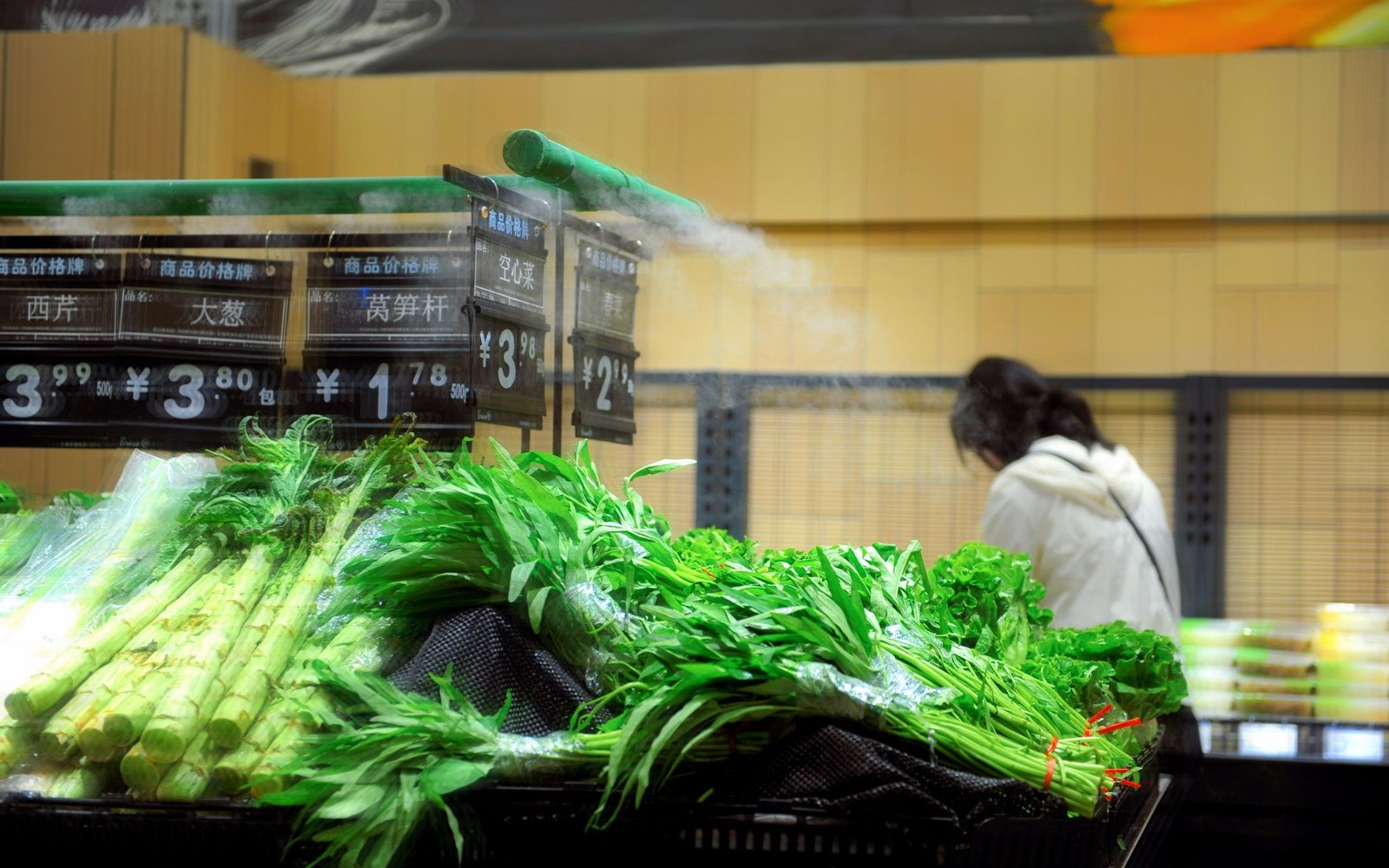
The route that takes you past everything before it lets you leave.
01The edge is where the fresh food lives
Walk into almost any large supermarket and you will quickly notice that the perimeter is different in character from the centre. The outer walls carry fresh produce, butchery, fish, dairy and bakery — categories that need refrigeration or frequent restocking, yes, but that is only part of the explanation. They are there because they draw the shopper around the full circuit of the store before that shopper reaches the ambient aisles in the middle.
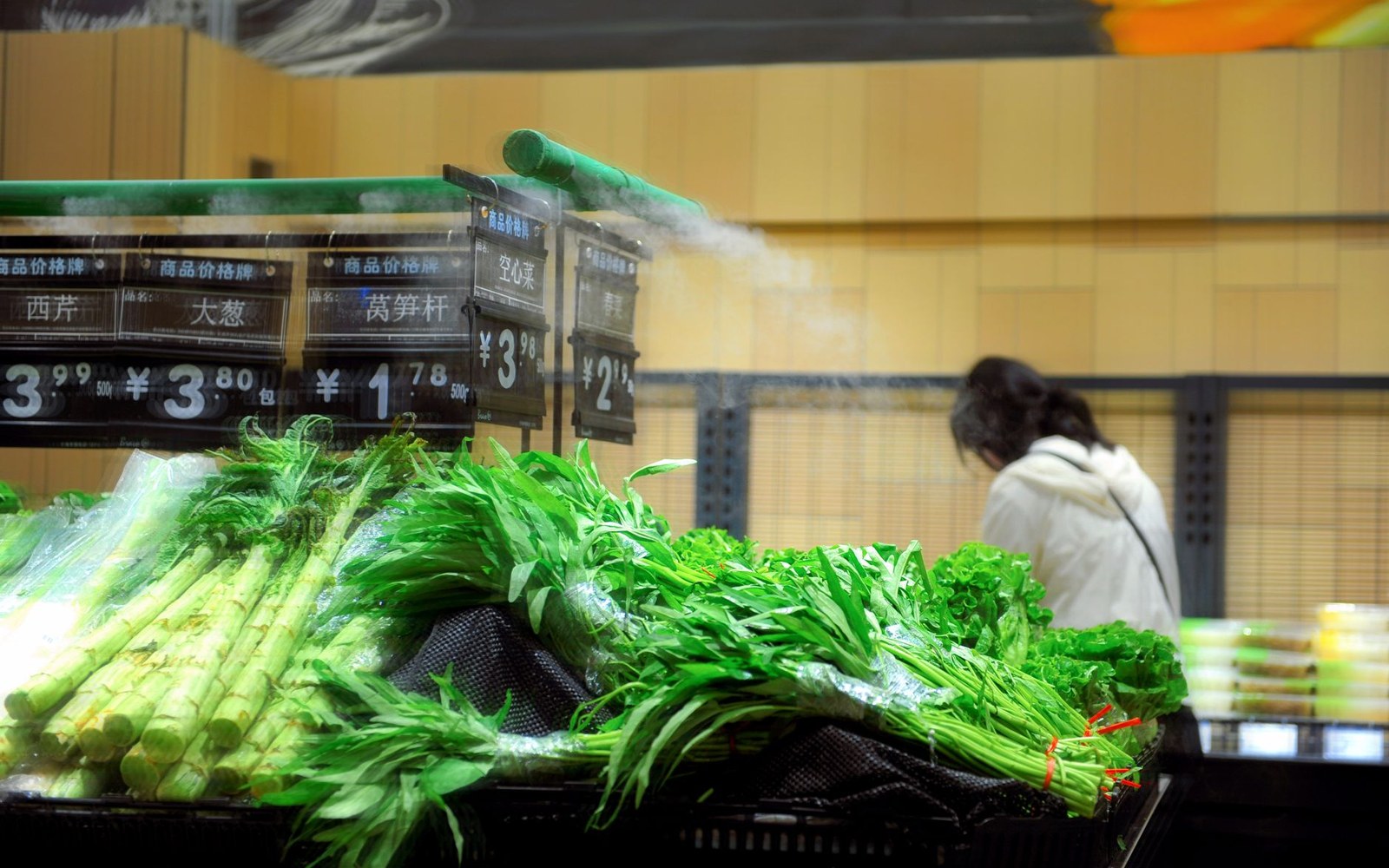
Fresh categories ring the outside wall — the departments that look like work being done.
Fig. 2 · Photo: 阿凯 AARONK / Pexels
The design principle is simple enough to state: place what people reliably want at the margins, so that reaching it requires a journey. Milk belongs at the back for the same reason the butchery counter sits at the far corner — not because those positions suit the logistics, but because a shopper who has walked the perimeter has passed every department along the way. Each step is an opportunity.
02The perimeter as persuasion architecture
The loop itself is rarely signed or obvious. It emerges from the placement of fixtures, the position of refrigerator banks, and the way counters are angled. Retailers who have studied pedestrian flow — Paco Underhill's fieldwork documented in the 1990s being among the earliest systematic accounts — know that shoppers follow the path of least resistance, and that the perimeter provides exactly that: an open corridor with clear sight lines and a sequence of fresh, appealing goods.
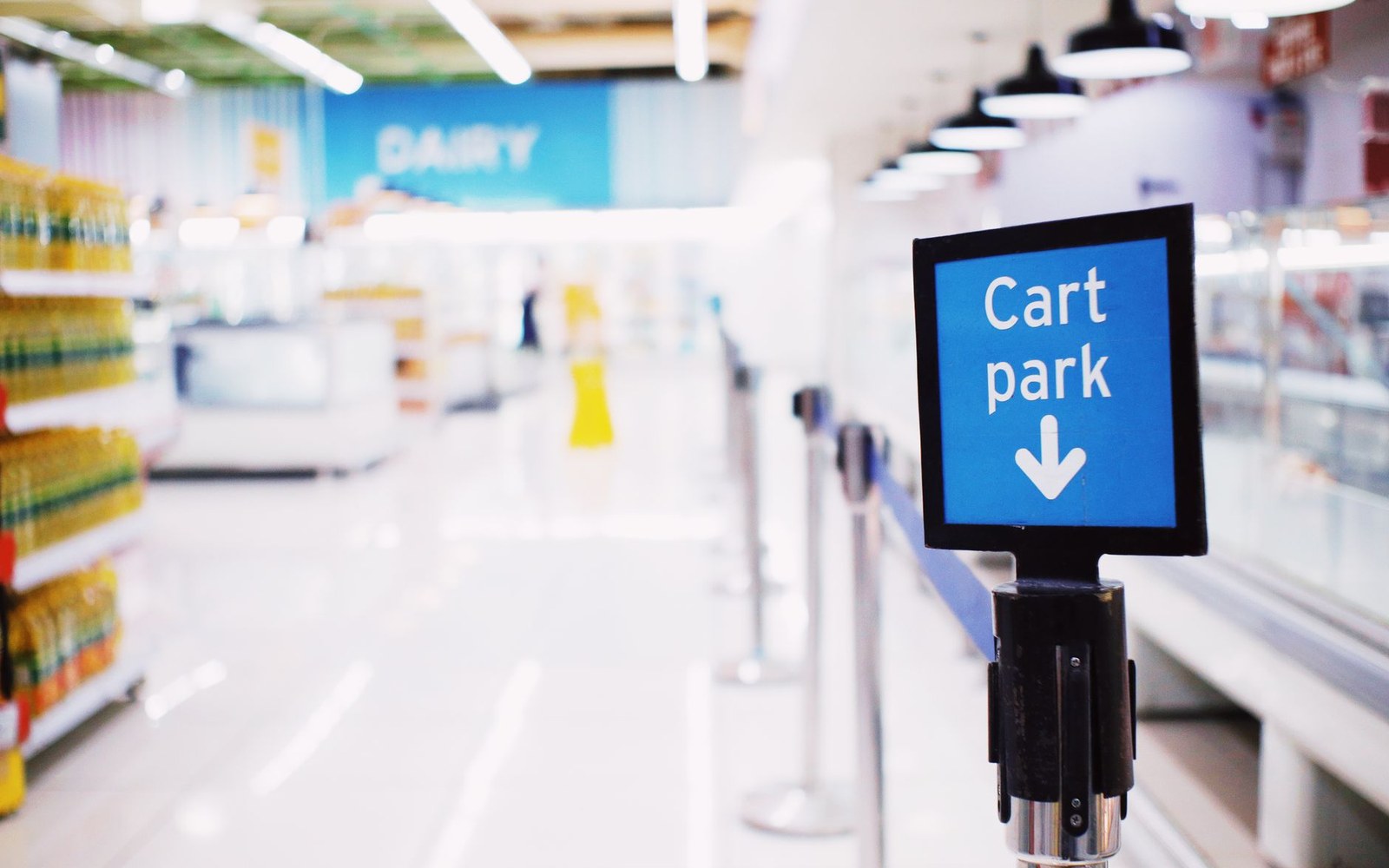
The centre of the floor is ambient stock in long parallel runs, met after the loop.
Fig. 3 · Photo: Nothing Ahead / Pexels
That sequence is not accidental. Produce and flowers tend to anchor the entrance, because they are colourful and suggest freshness across the whole store. Bakery frequently sits in a later quadrant, positioned so that the smell of bread reaches a shopper who has already committed to the circuit. What the loop achieves, in aggregate, is exposure — not to every product in the building, but to every department. A shopper who has passed the deli counter, the fish display and the chilled ready meals before they pick up their first item has already formed a mental picture of the store that includes many things they did not arrive intending to buy.
They are there because they draw the shopper around the full circuit of the store before that shopper reaches the ambient aisles in the middle.
The ambient centre — tins, cereals, cleaning products, packaged goods — is where the planned shopping largely happens. It is also where margin is maintained through shelf position and pricing, not through atmosphere. The perimeter delivers mood. The interior delivers volume. The two work together, and the route between them is the mechanism.
03Why the loop persists in the face of the familiar
Shoppers are not unaware of this. The broad logic of perimeter fresh, central ambient, milk-at-the-back is no secret. And yet the loop continues to function, for the same reason charm pricing continues to function after universal exposure: knowledge of a technique does not neutralise the technique. A shopper who knows the bakery is there to soften them up still smells the bread. A shopper who recognises the loop still walks it, because the alternative — cutting through the centre aisle by aisle from the entrance — is less comfortable, less obvious and more likely to mean missing something actually on the list.
This is the architectural version of a nudge. No instruction is given, no choice is prohibited, and yet the built form creates a strong default path. The shopper who deviates from it is the exception, and deviating costs navigational effort that most people, most of the time, decline to spend.
The perimeter loop is also one of the harder techniques to replicate online, where a screen cannot impose a physical circuit. The spatial logic of the big supermarket floor — dense, experiential, sequential — is a structural advantage that ambient e-commerce shelving has not fully closed. Which may be one reason the format has remained so durable, through every decade of format change and every shift in how people claim they want to shop.
This page describes a retail technique and where it came from. It contains no guidance about money, no products and no offers.
Next · 02 Route
Dead ends and racetracks →